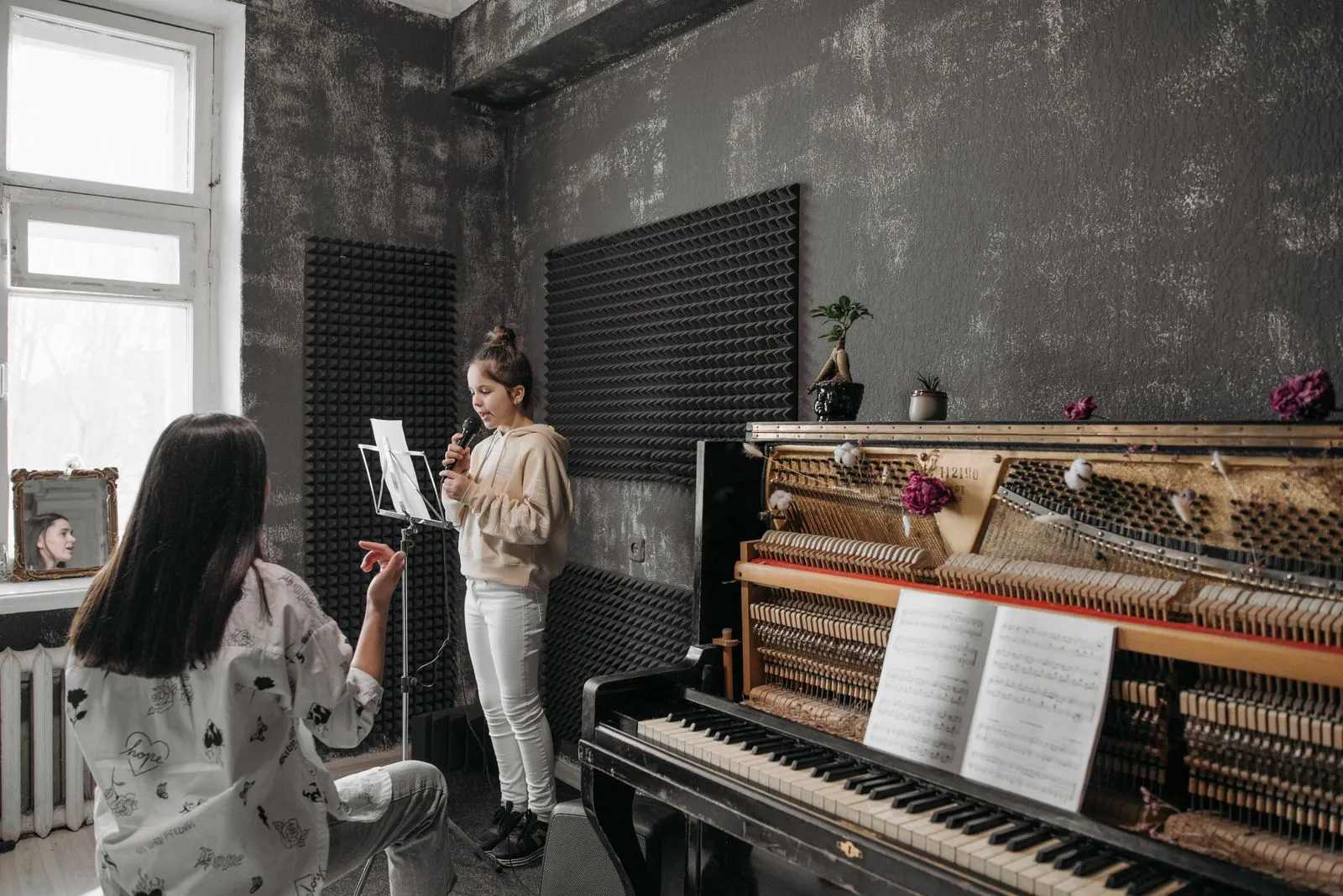
Your first singing lesson is a chance to understand how your voice works and what you would like to develop. You do not need to arrive with polished songs or formal music training. A little preparation can help you make the most of the session: bring a few useful materials, think through your aims, and come ready to describe what feels comfortable or challenging. Your coach can then tailor the lesson to your experience and interests.
What to Bring
Bring a notebook or use your phone to record notes after the lesson. Write down songs you enjoy singing, along with any passages or techniques you want to ask about. If you have sheet music, lyrics, or a backing track for a song you are working on, bring those too. You do not need to prepare every detail; these materials simply give your coach a useful starting point.
Wear comfortable clothing that lets you breathe and move easily. A bottle of water can be helpful, especially if you are coming from a busy day. If you use an instrument, such as a keyboard, to find notes while practicing, mention it to your coach. Leave room for adjustments: your coach may suggest a different song, key, or exercise once they hear your voice.
Describe Your Goals
Think about what you hope to gain from lessons. Your aim might be to sing with more confidence, prepare for an audition, improve pitch, explore a style, or feel more at ease performing. It is fine if your goal is broad. Sharing what prompted you to book helps your coach choose a useful first step and understand what success would look like to you.
Be specific about what you find difficult, even if you are not sure why it happens. You might lose confidence on high notes, run out of breath during a phrase, struggle to match pitch, or feel tense when singing in front of others. Describe when the issue appears and what you notice in your body or sound. Your coach can help identify practical ways to work on it.
What the Coach May Explore
An initial session often begins with a conversation about your experience, interests, and goals. Your coach may ask about music you listen to, songs you enjoy, previous training, and how often you sing. These questions help shape the lesson around you. You can also mention health concerns that affect singing, or simply say that you would prefer to take an exercise gradually.
Your coach may guide you through gentle warm-ups, breathing activities, pitch exercises, or a short song. They may listen for how you start notes, move between pitches, shape words, and use breath. This is not a pass-or-fail test. It gives both of you a chance to notice what is already working and choose an appropriate area to develop.
Expect feedback and small experiments rather than a complete assessment of your potential. A coach might invite you to repeat a phrase in a different way or sing it in a comfortable key. Ask what an exercise is intended to do, and say if something feels uncomfortable. Clear, honest communication helps keep the session focused and gives you useful ideas to practice.
Set Up for a Useful First Visit
Before the lesson, get enough rest, drink water as you normally would, and avoid trying to force your voice through strain. If you feel unwell or have lost your voice, let the studio know and ask whether to reschedule. Arrive with a little time to settle in, especially if you feel nervous. You can tell your coach that it is your first lesson; they can explain what to expect.
Afterward, note one or two things you learned and ask what to practice before your next session. A short, manageable exercise is usually easier to repeat consistently than an ambitious routine you cannot fit into your week. If you take lessons with Galway Voice Studio, share your aims and any questions when arranging your first visit so the coach can help you begin with confidence.
Bring a few songs or notes, describe what you want to improve, and stay open to trying simple exercises. Your first lesson is a collaborative starting point, not a performance to perfect. With clear communication and a manageable next step, you can leave with a better sense of your voice and how to develop it. Contact a singing coach to discuss your goals and plan your first session.